
Start a Whitehall Street Directory Search
Whitehall sits in Franklin County, so an address trail begins with the Franklin County Auditor Property Search, not with a citywide household list. Use the address mode when the street number is known. Its captured results show a parcel ID, address, Owner 1, and Owner 2. Record the parcel ID and the physical address before opening another system. The Auditor also offers Map Search, Intersection Search, Parcel Viewer, and a list-to-map route, which help distinguish a similarly named street or a nearby parcel.
- Enter the Whitehall address in the Auditor's Address mode and save the returned parcel ID, physical address, and owner-of-record fields.
- Open the selected parcel or map route. Note the legal-description clues that identify the land rather than relying on the street label alone.
- Use the Franklin County Recorder search with the party name, legal description, instrument information, or historic book and page reference.
- For a registration question, use the name-and-county Ohio Voter Search or inspect the Board's documented public-file channel, subject to its statutory exclusions.
- For a historic household clue, check the Columbus Metropolitan Library directory collection after the parcel and period are clear.
The sequence is address to Auditor, parcel and legal description to Recorder, then a narrowly appropriate voter or library source. The voter tool is not a browse-by-street roster. Its lookup requires first name, last name, and county, while Franklin County's Election Vault is a download catalog with a Whitehall city or village file and street-district material. Treat both as records with limits, not as an invitation to compile a block list.
Whitehall Street Directory at the Auditor
The Auditor is the practical front door for Whitehall streets because the Recorder does not organize property documents as a street-address index. Owner search accepts the format LastName FirstName, while parcel searches accept all or part of an ID without dashes and support wildcard use. An address result is a property-inventory result, not confirmation of every person who lives there. The Auditor asks users to verify web information with the primary source, a sensible step when a record matters.
| Auditor field or route | Use on a Whitehall street | Documented format or result |
|---|---|---|
| Address | Start from a known house number and street | Required in Address mode; detailed live instructions were not captured. |
| Owner Name | Check an owner-of-record field after a parcel is known | LastName FirstName; results show parcel ID, address, and owner columns. |
| Parcel ID | Return to the exact property account | All or part of the number, omit dashes; wildcard use is documented. |
| Map or Intersection Search | Resolve location context on a street segment | Spatial and cross-street routes are available. |
| View List-Map and reports | Compare selected property results | Controls appear after results; sort and paging are also available. |
Up to 500 results can appear when an exact parcel match fails, so a broad parcel query deserves tightening. The portal also showed temporary maintenance notices for some Historic District and Subdivision criteria. Check the live search before depending on either option.
See the Auditor parcel and map search as captured for this address search.
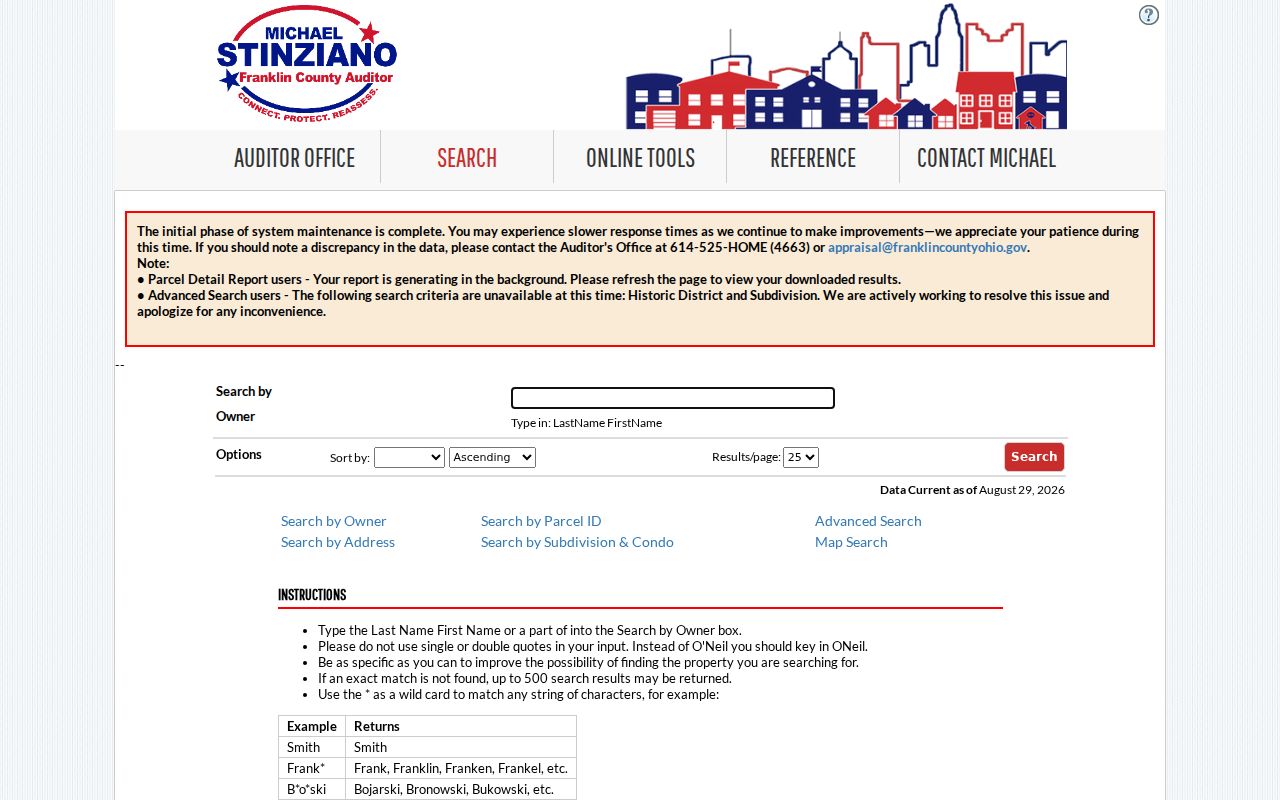
The image shows the county system that supplies the address-to-parcel starting point before a street search moves into deeds or historic records.
Whitehall Street Parcels in GIS
Use a map to understand property setting, not to turn parcel names into a resident list. The Whitehall GIS and Zoning Finder leads to the city's parcel interface, which has documented Parcel ID, Ownername, Site Address, and ArcGIS World Geocoding tabs. It can return up to six suggestions or results. A selected parcel may show parcel ID, tax district, school district, land use, site address, owner fields, legal-description fields, and an Auditor-detail link.
Franklin County's separate Parcel Viewer documentation describes shape, value, and spatial searching; a selected parcel can be buffered by a chosen distance, and results can be exported as CSV. Road centerlines, parcel labels, administrative areas, aerial imagery, measurement, and print or export tools are documented. Use that context to resolve which parcel belongs to a physical address. Do not infer a person's home from an owner field or a mapped boundary.
The Whitehall GIS finder is the source for this street-search interface.
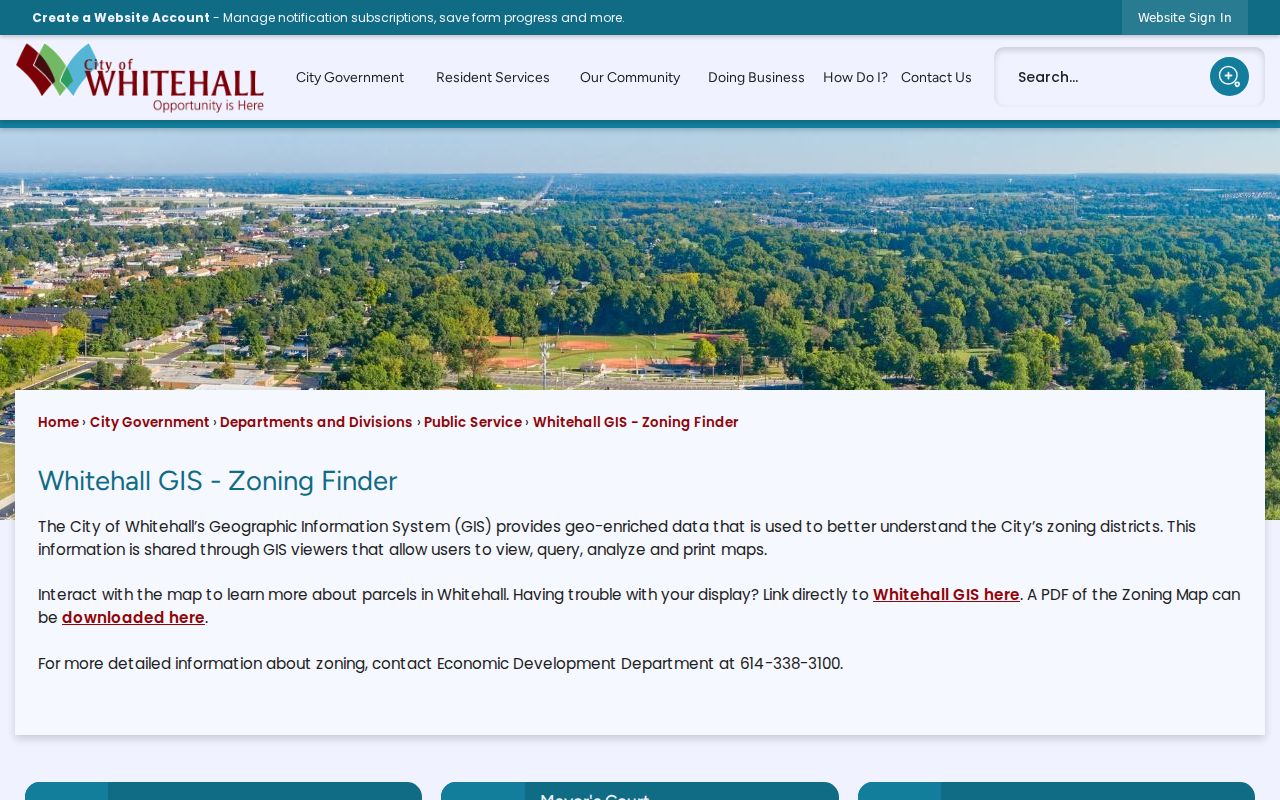
GIS narrows the physical parcel and supplies a link back to property detail, which keeps a Whitehall street directory search tied to the correct land record.
Whitehall Street Permit and Code Files
Municipal files can add an address-specific event to a property trail. Whitehall advertises Building Permits and its CivicGov portal covers permits, business activity, complaints, and public-record searching. No complete public permit-search field list or stable result set was verified. The useful fallback is a focused request to the development or permit custodian that names the street address, date range, project type, and the record sought, such as an application, certificate, inspection, or code case.
Whitehall Mayor's Court is another separate route for a known local traffic, misdemeanor, or code-enforcement case. Its published Tuesday schedule includes a code-enforcement slot. A docket or clerk request concerns the specified case, not a general street search. The city's NextRequest FAQ says a requester need not state a reason or identify themself, but must describe the record clearly enough for staff to locate it. Complex requests may be acknowledged within three business days with an estimate of time and cost.
The Whitehall CivicGov portal is the source for the city permit and public-record channel.
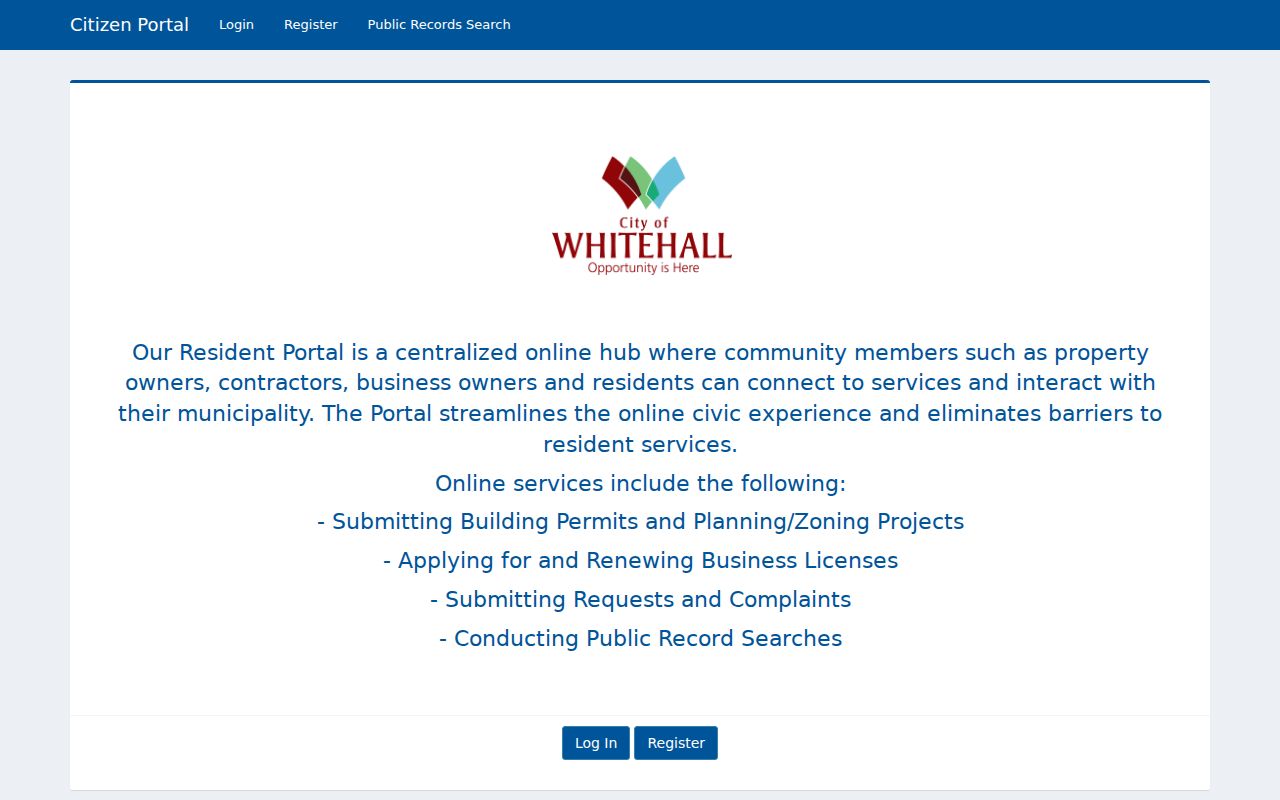
The portal is a city-record starting point when a parcel search leaves a focused question about permits, complaints, or a municipal record.
Note: A clear request for a defined address, time period, and file type is more useful than a request for every record connected with a property.
Whitehall Street Deeds Without an Address Index
The Recorder's lack of a property-address index is the central Whitehall street-directory quirk. A street number must first become a parcel and legal description at the Auditor. Then search Recorder Cloud Search or the legacy system by party, document number, book or volume and page, or legal description. Cloud Search accepts a Search Term, recorded-date range, party-name fields, document type, document-number routes, full-text OCR, and subdivision or freeform legal-description fields. Its OCR option treats multiple terms as a phrase.
For the backward chain, find the current acquiring deed, record the grantor, grantee, instrument or book reference, date, document type, and legal description, then search the prior seller's acquisition. Deeds after May 15, 1997 can use a 15-digit instrument number. Documents from October 10, 1980 through that date may have a microfiche volume-letter-page sequence, while earlier material uses book, volume, and page. The archival deed indexes reach 1804 through 1913, but an 1879 fire destroyed some records and most were reconstructed.
- Parcel
- A tax-account unit used to identify a piece of land in the Auditor's inventory.
- Situs address
- The physical street location used for assessment and navigation display.
- Legal description
- The lot, subdivision, condominium, survey, or metes-and-bounds description that connects land to a deed or plat.
- Plat
- A recorded map or plan that can tie a lot and subdivision name to the legal description.
- Criss-cross directory
- An address-arranged directory that can provide a historic name-and-address clue, not proof of current occupancy.
The Franklin County Treasurer property-tax search is a related tax-account route recommended by the Recorder.
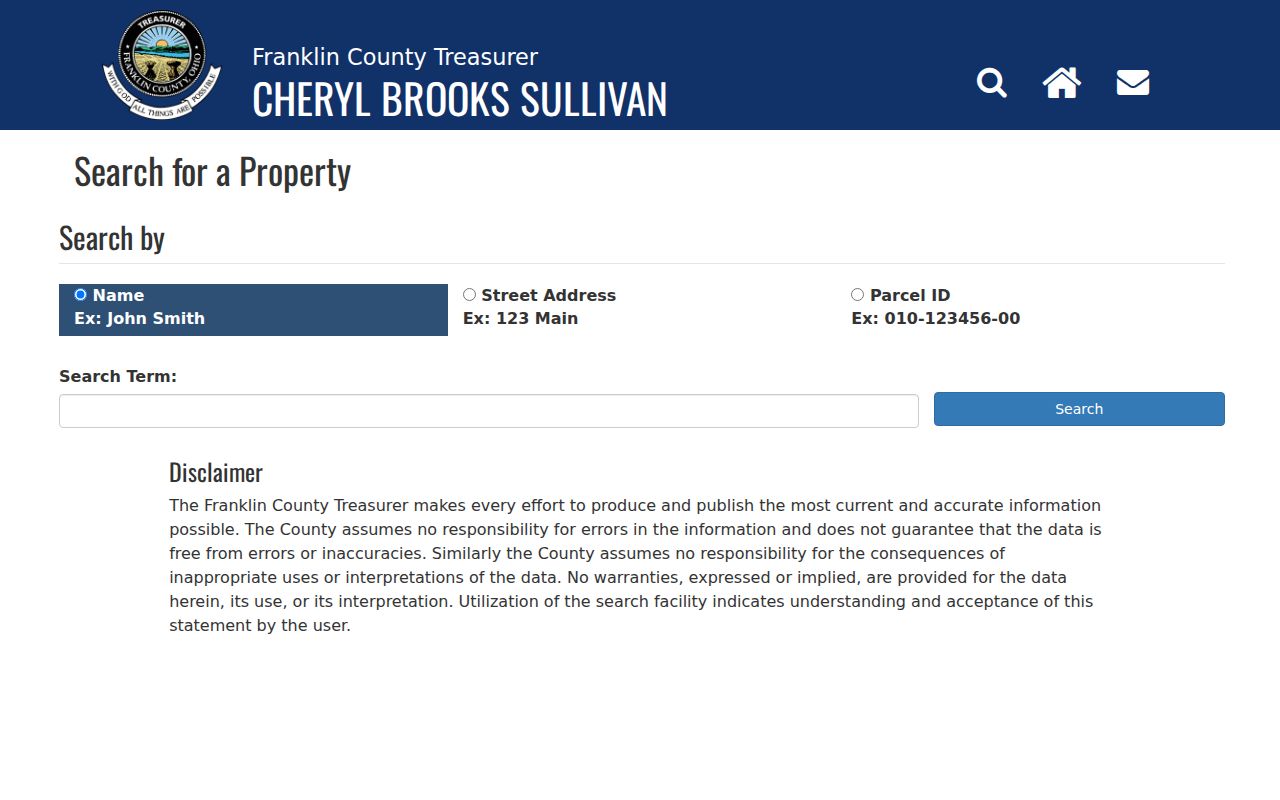
Tax-account information belongs beside, rather than inside, the deed chain: the Treasurer handles tax context while the Recorder holds legal instruments.
Whitehall Street Records By Address
Each custodian answers a different address question. The most dependable chain begins with the Auditor and moves to the Recorder only after the parcel or legal-description clues identify the land. A Board of Elections file or voter lookup has its own statutory framework. The library's city-directory and house-history materials serve an older household question. Keeping these functions separate prevents an owner, a tax account, or a court entry from being mistaken for a complete street roster.
| Address-keyed source | Custodian | Useful Whitehall question | Access channel |
|---|---|---|---|
| Property Search and map | Franklin County Auditor | Which parcel and owner-of-record fields match an address? | Public address, owner, parcel, map, and advanced routes. |
| Parcel Viewer | Franklin County Auditor | What is the mapped setting of the selected parcel? | Auditor portal and documented viewer tools. |
| Deed and legal-instrument index | Franklin County Recorder | Which recorded transaction matches the legal description? | Cloud or legacy search, counter, phone, and certified-copy channels. |
| Property-tax search | Franklin County Treasurer | What tax-account context applies to the property? | Recorder-linked Treasurer search. |
| Permit or code material | Whitehall city custodian | Does a defined municipal file exist for the address and period? | CivicGov links, Mayor's Court route, or focused records request. |
| Voter and election files | Ohio Secretary of State and Franklin County Board | What registration or election-geography record is available lawfully? | Name-and-county lookup, Election Vault downloads, or Board staff. |
| Historic directories | Columbus Metropolitan Library | Is there an older address-to-name clue in the selected volume? | Local History & Genealogy, digital collection, and staff help. |
The Recorder counter, the Auditor's correction contact, city records staff, and library staff remain useful when a public interface does not expose the needed record. Certified Recorder copies can be requested online, by mail, or in person. The research states $2 per page plus $1 per document certification, with postage where applicable.
Whitehall Street Addresses: Owner Is Not Resident
A property record can name an owner and show a situs address, yet neither field confirms every current adult who occupies the building. A property account may also use a mailing or contact address that differs from the physical site. That contact destination can be an office, a post-office box, an agent, a relative, or another mailing choice. It should never be presented as proof that the owner lives at the Whitehall property.
This distinction is especially important where an address is being compared with a map result. The Auditor's captured results establish parcel ID, address, and owner columns. Other details may appear on a live parcel card, but the research did not capture one verified Whitehall card's exact fields. Check the current card, then ask the Auditor to correct a discrepancy rather than assuming an old web result resolves it.
Note: A parcel owner, a correspondence address, and a person physically present at a street address are different kinds of facts that require different evidence.
Whitehall Street History After 1911
For a past address, the Columbus Metropolitan Library's house-history route adds a different kind of evidence. The library says city-directory entries become address-arranged or reverse-capable from 1911. Those volumes may help connect a former household to a street and year, but selected volumes must be checked for Whitehall coverage. The regional shelf is not proof that every volume includes each Whitehall address.
Older property work also needs geographic care. Whitehall grew from Truro Township and incorporated in 1947, so earlier deeds, tax material, census work, and directories may use township, tract, National Road, or other historic context rather than a modern city label. The City's history names postwar development in English Village, Parklawn Manor, and Norton Field, useful clues when a subdivision name appears in a legal description. The historical collection itself is covered in more detail on the Whitehall city directory page.
Privacy Limits for Whitehall Street Searches
Address records have hard boundaries. Property and deed records do not supply a complete household list. Utility customer data, delivery information, and motor-vehicle address records are not a public street directory. Voter records are public only within the rules and exclusions of Ohio law, and Safe at Home material is protected. A missing, redacted, or substitute address is never a reason to piece together a protected location from other sources.
Ohio's Public Records Act is R.C. 149.43, and Safe at Home protections include confidential address material under R.C. 111.41 through R.C. 111.47. For an individual postal question, confirm the delivery address before narrowing records by postal geography; the Whitehall ZIP code lookup explains why postal labels and city limits do not always match.