
Whitehall City Directory Collections at CML
Columbus Metropolitan Library, or CML, is the primary historical shelf for a Whitehall city directory search. Its Main Library Local History & Genealogy service connects printed and microform directories with digital history, maps, census material, family histories, court records, and newspapers. The library’s house-history research describes annual Columbus directories from 1841 and says they commonly give a resident’s name, address, and often occupation. The catalog evidence identifies a Columbus run for 1843 through 1889, while digitization remains in progress. Nearby places, including Whitehall, appear on some title pages, but a selected volume must be checked before claiming that a particular year covers Whitehall.
| Collection | Years | Where Held | Access |
|---|---|---|---|
| Columbus City Directory catalog run | 1843-1889 in the catalog; CML guide dates directories from 1841 | CML Main Library | Cataloged microform is for in-library use; check individual volume coverage. |
| CML City Directory Collection | Digitization in progress, with most directories dating to the 1840s intended for inclusion | CML Digital Collections | Online collection; available years continue to change. |
| Early Franklin County telephone directories | Early years not listed on the inspected collection landing page | CML City Directory Collection | Digitized collection route. |
| FCGHS directory and local-history materials | Detailed shelf years not captured | Main Library third-floor genealogy department | Library and society assistance when a digital gap remains. |
The table separates confirmed availability from a promise of city-wide coverage. A directory may be annual and still omit a Whitehall street, use a regional title, or index an earlier Truro Township address under another place name.
CML’s house-history guide provides the source path for this Whitehall city directory research image.
The house-history service connects directory clues to maps, tax sources, newspapers, and other local research routes.
Whitehall City Directories in Digital Form
The online CML City Directory Collection is useful when a title has been digitized, especially for early Franklin County telephone books and older city volumes. The collection description says the work is still under way, so an online miss is not proof that the year never existed. Use the collection’s browsing and search tools first, then ask a librarian about a physical or microform counterpart. CML’s general research pages also point to genealogy databases, maps, yearbooks, and other resources that can clarify an address or surname without treating a search snippet as final evidence.
CML’s digitized City Directory Collection shows the online collection path used for regional historical volumes.
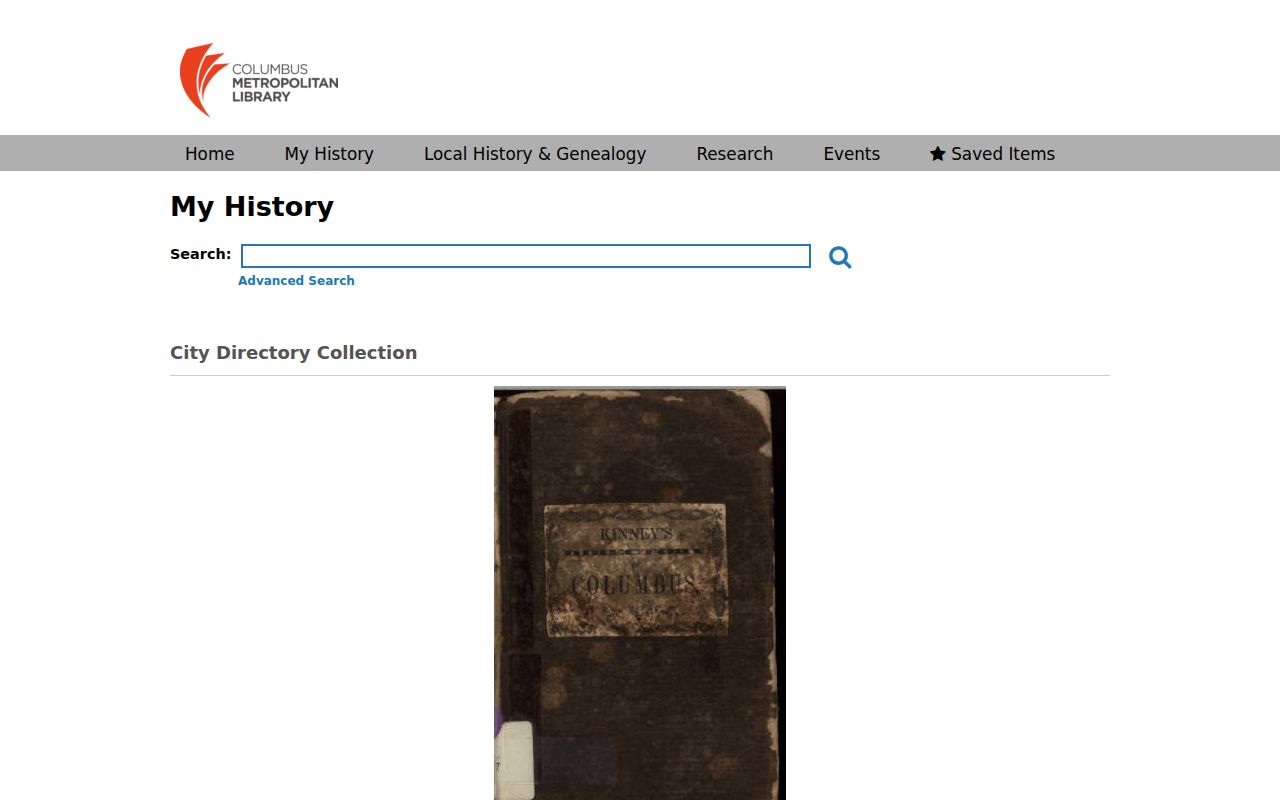
Digitized access can save a trip, but the selected title page and its coverage still need a close read.
CML research resources provide the companion databases and subject tools that support a city directory search.
Those research routes are useful for checking a household clue against historical sources held by the library.
Whitehall Names Before Incorporation
Place names are a central Whitehall city directory problem. The city incorporated in 1947, while the land east of Alum Creek was earlier part of Truro Township. The City history identifies an 1836 transfer as the earliest “White Hall” reference. Older research can therefore require searches for Truro Township, White Hall, National Road, or the earlier tract context rather than a City of Whitehall label. That shift is not a defect in a directory. It reflects how the place was named at the time.
Whitehall’s official history describes the city’s development from the earlier township setting through later growth.
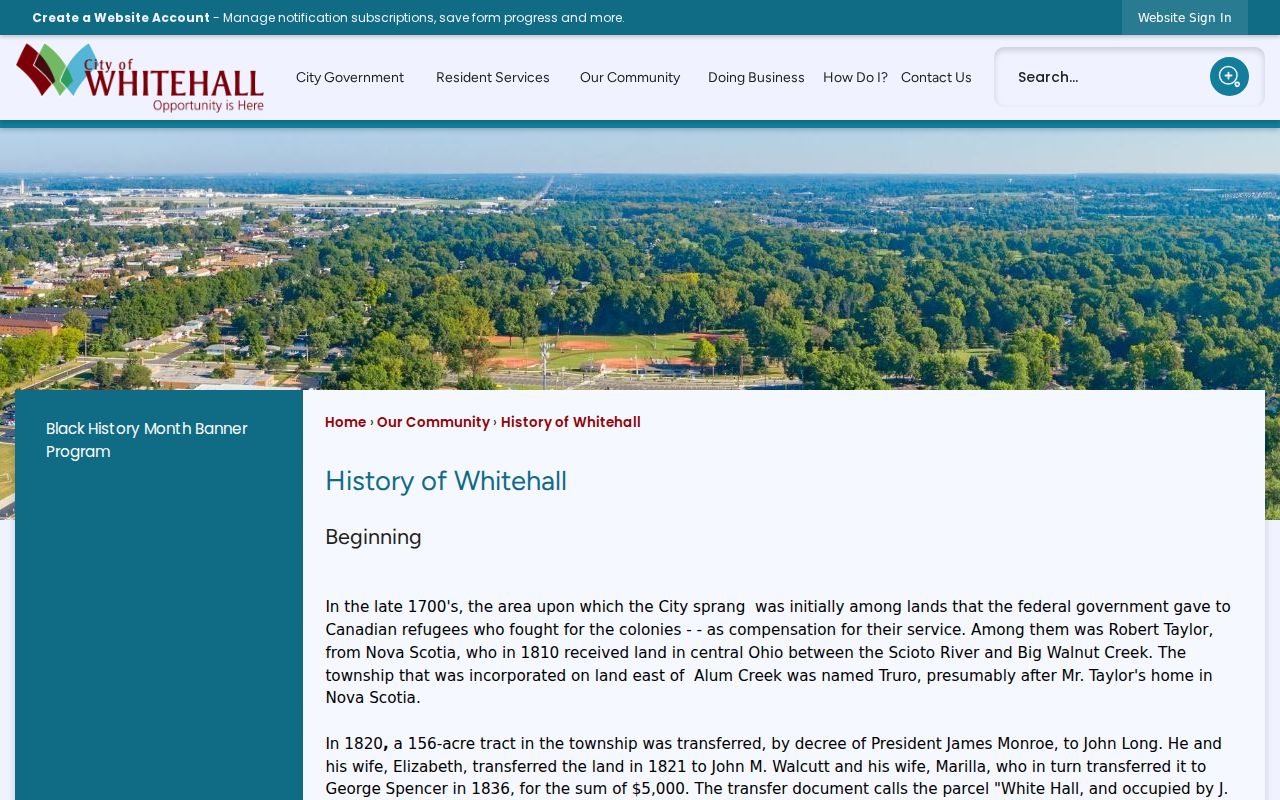
Historic place names help explain why a surname may be filed outside a modern Whitehall heading.
Note: Record each place name exactly as printed, including township and road references, before comparing it with a current Whitehall map.
Reading a Whitehall City Directory Entry
A city directory entry should be read as a small historical record, not as a complete household roster. CML’s guide verifies the core pattern: annual directories list residents, their addresses, and often occupations. A regional 1889-90 R.L. Polk sample uses surname-first lines and the abbreviations h for home and wid for widow. That sample is useful for local format, but this research did not verify spouse notation, employer data, ownership marks, or every abbreviation in a Whitehall-inclusive volume. Photograph or note the key printed in the actual volume before interpreting an unfamiliar mark.
| Name | Directory lines are commonly surname first; initials, suffixes, and spelling variants matter. |
|---|---|
| Address | The verified annual-directory clue for locating a historic household or comparing a move. |
| Occupation | Often listed according to CML’s guide, but it is not guaranteed in every entry. |
| h | Home or residence notation in the inspected 1889-90 regional Polk sample. |
| wid | Widow notation in that same regional sample; confirm the volume’s own abbreviation key. |
| Unverified fields | Do not assume spouse, employer, owner, or boarder notation without reading the chosen volume. |
- Criss-cross directory
- An address-arranged or reverse directory section that begins with a street or address instead of a person’s name.
- Householder index
- A name or address aid that helps identify the person associated with a listed household, not every person in the structure.
- Abbreviation key
- The printed explanation of the volume’s shortened terms; consult it before expanding a notation into a family fact.
Whitehall City Directory Addresses After 1911
CML’s house-history guide says city directories become address-arranged from 1911, creating a documented reverse-address method. That makes later volumes especially useful for following the history of one location, provided the selected directory covers the Whitehall area in question. CML’s catalog also confirms a 1996 Polk Cross-reference Directory for Franklin County Ohio for in-library use. A reverse section can produce an address clue, then a name-based entry can add a date or occupation clue. It should not be used as a current list or as proof of every person who lived there.
The reverse method complements, rather than replaces, the county deed trail. The Franklin County Recorder’s search brochure documents legal instruments and historic deed-index access, while a directory records a different kind of annual household clue.
A deed reference can corroborate a property transaction, but it is not a substitute for the directory’s historical address context.
Whitehall Historical Shelf and Staff Help
CML Main Library Local History & Genealogy is the appropriate desk when a digitized run has a gap or an entry needs context. The team allows browsing without an appointment, offers a one-hour in-person research consultation, and provides Ask a Librarian assistance. The Main Library is at 96 S. Grant Avenue. It also offers up to six free recent U.S. obituary requests each month. The Whitehall Branch is a general branch, not the Local History & Genealogy repository. For a city directory question, provide the surname, approximate year, old address or township, and the exact title already checked.
Franklin County Genealogical & Historical Society collection information explains that its materials are housed with other genealogy resources in the Main Library’s third-floor genealogy department.
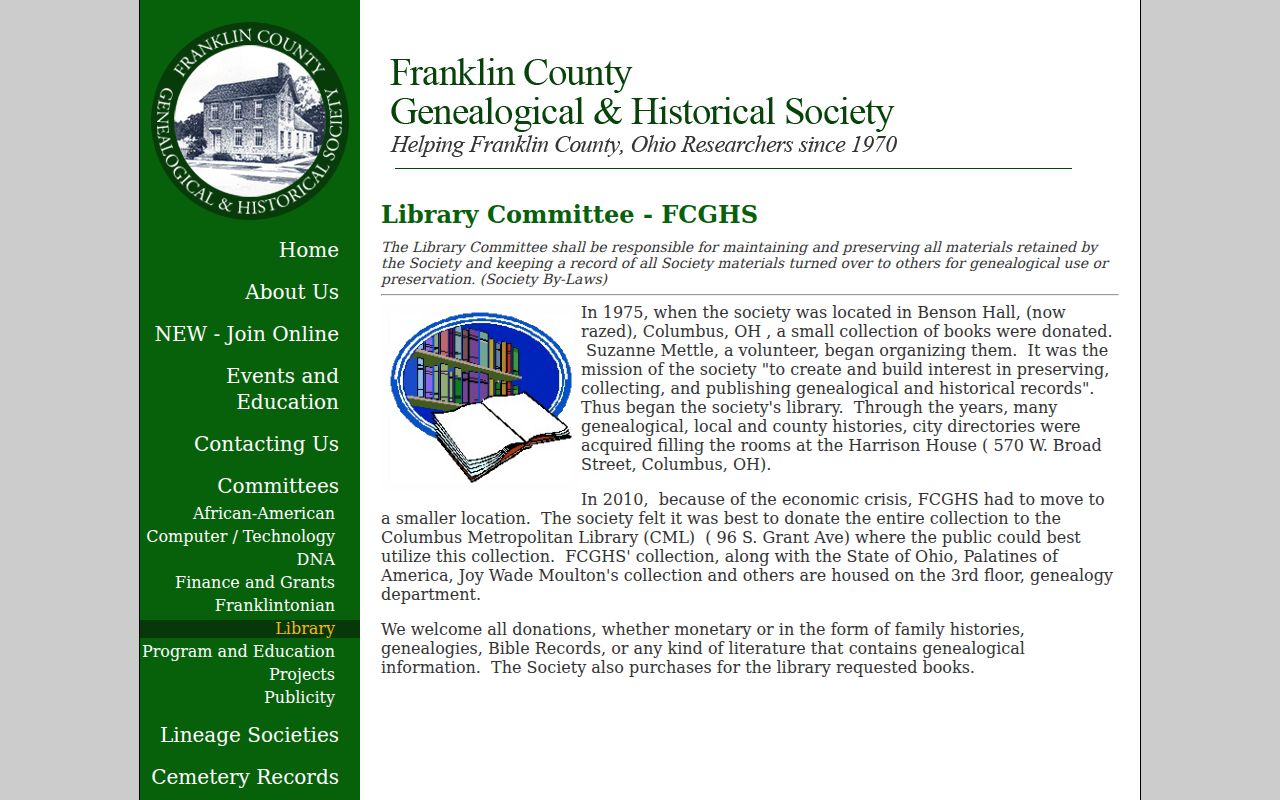
The society’s city-directory, local-history, atlas, and family materials provide an in-person fallback when online results end.
Tracing a Whitehall Household Through City Directories
Build a household trail slowly. Start with one entry that has a name and address, then compare nearby annual volumes for a move, a change in occupation, or a different spelling. Pair the sequence with the nearest released federal census rather than assuming that a directory’s locality label matches today’s city boundary. As of 2026, 1950 is the latest released federal census schedule. Newspaper and obituary indexes can help explain a move or death, but they are supporting evidence, not a replacement for a government or archival record.
- Find a surname or address in a selected directory and preserve the title, year, page, spelling, and place label.
- Check adjacent annual issues for the same address, noting only changes actually printed in each entry.
- Use an address-arranged section when the selected volume has one, then return to the name listing for context.
- Compare the period with the nearest released census, taking township, ward, and boundary changes into account.
- Use a deed, probate file, or obituary index only to test a specific historical question raised by the directory trail.
A missing name can mean many things: a move, a changed spelling, an omitted area, a gap in the run, or a different household arrangement. It does not establish a life event by itself. For modern address-keyed property questions, use the separate street records tools instead of stretching an old volume beyond its purpose.
Note: Keep the directory citation with every observation so a librarian or family member can repeat the same historical search later.
Whitehall Yearbooks and Newspaper Clues
The Whitehall Historical Society material in CML’s digital collections adds a local companion source. The Society reports digitized Whitehall City Schools publications, reunion programs, student magazines, and more than 200 Whitehall and East Columbus school yearbooks. The searchable 1989 Whitehall-Yearling is one example. Such material is useful for a former-classmate or family-history question, but it is not a current directory. CML also indexes Columbus News articles from 1960 through 1997 and obituaries from 1934 through 1997, while the house-history guide lists Columbus Dispatch electronic editions from July 1985 forward.
Use an address, former owner name, school year, or exact date to make these complementary collections manageable. For earlier property context, CML identifies Franklin County tax-duplicate holdings at Ohio History Connection for 1806-1810, 1816-1838, 1868, 1902-1907, and 1914-1919. Those dates are collection leads, not a claim that each record names a Whitehall household.
Whitehall City Directory Dates and Gaps
Directory work has a regional timeline. It begins before Whitehall’s incorporation, continues through changing print formats, and now depends on a mix of digital access and library shelves. The dates below distinguish confirmed collection milestones from assumptions about any individual Whitehall address.
- 1836: the City history identifies the earliest “White Hall” reference in a land transfer.
- 1841: CML’s house-history guide dates Columbus city directories from this year.
- 1843-1889: catalog evidence identifies this Columbus City Directory run.
- 1911: CML says directories become address-arranged, enabling a reverse-address approach.
- 1947: Whitehall incorporated, so earlier records may require Truro Township or older place labels.
- 1996: CML’s catalog confirms a Polk cross-reference directory for Franklin County, for in-library use.
These dates help set expectations without inventing a separate Whitehall annual publisher run. When a needed year is not online, the best fallback is CML staff, the FCGHS materials in the Main Library, or an archival inquiry for the specific title and date.